

The History of Ford
The History of Ford Motor Company

Early Beginnings
The Ford Motor Company, founded by Henry Ford on June 16, 1903, in Dearborn, Michigan, has grown to become one of the largest and most influential automobile manufacturers in the world. Henry Ford's vision was to create affordable and reliable vehicles for the masses, which he achieved through innovative manufacturing techniques and a focus on efficiency. Ford's early years were marked by experimentation and determination, leading to the development of the Quadricycle, his first gasoline-powered vehicle, in 1896. This early success laid the groundwork for the establishment of the Ford Motor Company, which quickly gained a reputation for producing high-quality vehicles.
The Model T and Assembly Line Innovation

One of Ford's most significant contributions to the automotive industry was the introduction of the Model T in 1908. The Model T was designed to be affordable, durable, and easy to maintain, making car ownership accessible to a broader segment of the population. To meet the high demand for the Model T, Ford revolutionized the manufacturing process by introducing the moving assembly line in 1913. This innovation drastically reduced production time and costs, allowing Ford to lower the price of the Model T and increase production. The assembly line method not only transformed the automotive industry but also set new standards for manufacturing efficiency across various sectors. By 1927, over 15 million Model Ts had been produced, solidifying Ford's place in automotive history.
Expansion and Diversification

By the 1920s, Ford had become a dominant force in the automotive industry, producing more than half of all cars in the United States. In 1922, Ford acquired the Lincoln Motor Company, expanding its product line to include luxury vehicles. This acquisition marked the beginning of Ford's diversification strategy, which would later include the ownership of other luxury brands such as Volvo, Land Rover, Jaguar, and Aston Martin. Ford's expansion was not limited to luxury vehicles; the company also ventured into aviation with the Ford Trimotor, an early commercial aircraft. Additionally, Ford established manufacturing plants in Europe and South America, further solidifying its global presence.
The Great Depression and World War II
The Great Depression of the 1930s posed significant challenges for Ford, as it did for many businesses. Despite the economic downturn, Ford continued to innovate, introducing the V8 engine in 1932, which became a popular choice for consumers seeking more power and performance. During World War II, Ford shifted its focus to support the war effort, producing military vehicles, aircraft, and other essential equipment. The company's Willow Run plant became famous for its production of B-24 Liberator bombers, showcasing Ford's ability to adapt and contribute to national needs. This period also saw the introduction of the "Fordism" concept, emphasizing mass production and high wages, which influenced industrial practices worldwide.
Post-War Era and Modernization

After the war, Ford resumed its focus on consumer vehicles, introducing new models and expanding its global presence. The 1950s and 1960s saw the introduction of iconic models such as the Thunderbird and the Mustang, which became symbols of American automotive culture. The Mustang, launched in 1964, was particularly notable for its sporty design and affordability, appealing to a younger demographic and becoming an instant classic. In 1956, Ford became a publicly traded company, allowing for greater investment and expansion opportunities. The company also invested in research and development, leading to advancements in safety features, such as seat belts and airbags, and the development of more fuel-efficient engines.
Challenges and Resilience

The late 20th and early 21st centuries brought new challenges for Ford, including increased competition, economic recessions, and changing consumer preferences. Despite these challenges, Ford remained resilient, focusing on innovation and sustainability. The company introduced hybrid and electric vehicles, such as the Ford Fusion Hybrid and the all-electric Ford Mustang Mach-E, to meet the growing demand for environmentally friendly transportation. Ford also invested in advanced manufacturing technologies, such as robotics and automation, to improve efficiency and reduce costs. The company's commitment to sustainability was further demonstrated by its efforts to reduce carbon emissions and increase the use of renewable energy in its operations.
Best-Selling Models
Ford has produced several best-selling models over the years, each contributing to the company's success and reputation. The Ford F-Series, particularly the F-150, is the best-selling vehicle in the United States, with over 41 million units sold. The Ford Fiesta, a popular compact car, has sold over 22 million units worldwide. Other notable best-sellers include the Ford Escort (20 million units), the Ford Model T (15 million units), and the Ford Mustang (10 million units). The Ford Focus, Ford Ranger, and Ford Transit have also been significant contributors to Ford's global sales, each selling millions of units.
Legacy and Future
Today, Ford continues to be a leader in the automotive industry, known for its commitment to quality, innovation, and sustainability. The company remains under the control of the Ford family, making it the largest family-controlled company in the world. As Ford looks to the future, it is investing in new technologies such as autonomous vehicles and advanced manufacturing processes to stay at the forefront of the industry. Ford's vision for the future includes the development of smart mobility solutions, such as connected vehicles and ride-sharing services, to address the evolving needs of consumers and urban environments.
Bob Maxey Ford of Howell
Bob Maxey Ford of Howell, located in Howell, Michigan, is a proud part of the Ford legacy. Serving the communities of Livingston County, Fowlerville, Brighton, and surrounding regions, Bob Maxey Ford of Howell offers a comprehensive range of new and used Ford vehicles, exceptional service, and financing options. With a commitment to customer satisfaction and a reputation for reliability, Bob Maxey Ford of Howell continues to uphold the values and standards set by Henry Ford over a century ago. The dealership's knowledgeable staff and state-of-the-art service center ensure that customers receive the best possible care and support for their automotive needs.
Contributions During the COVID-19 Lock-down Crisis
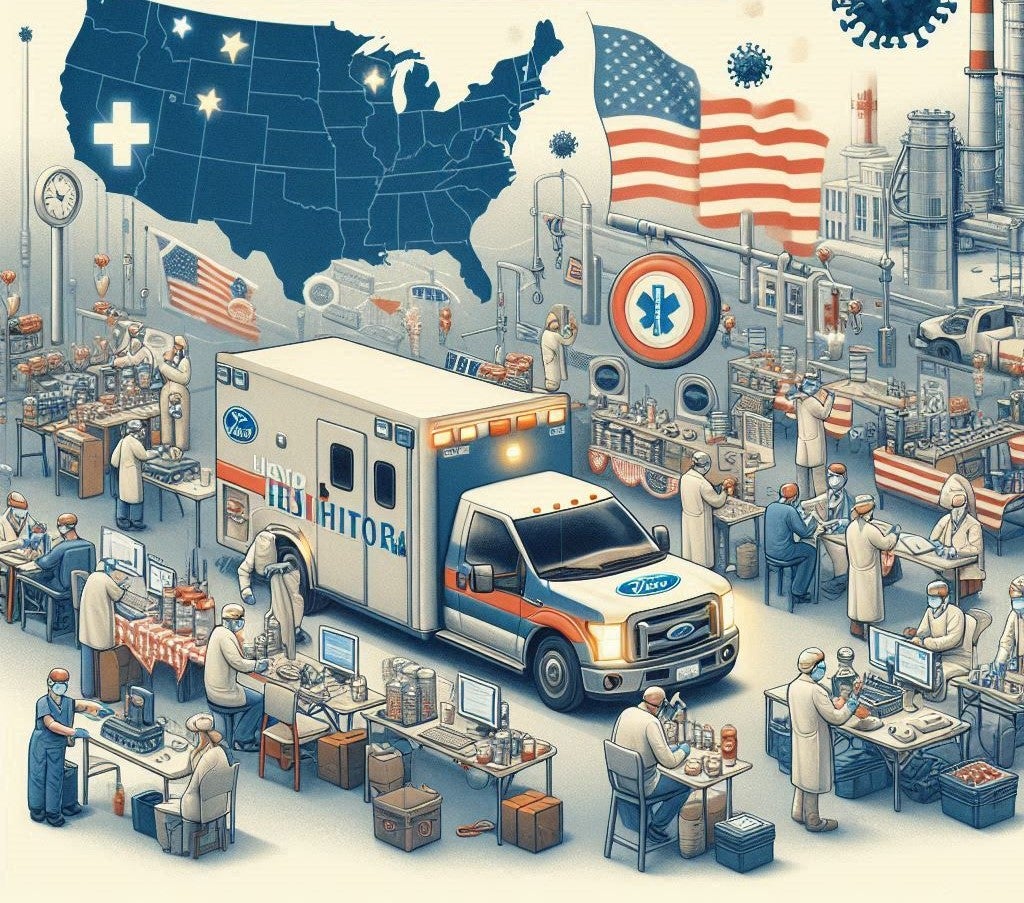
During the nationwide COVID-19 lock-down crisis, Ford Motor Company played a crucial role in supporting the healthcare system and communities across the United States. Recognizing the urgent need for medical supplies and equipment, Ford quickly pivoted its manufacturing capabilities to produce essential items.
Production of Personal Protective Equipment (PPE)
Ford launched "Project Apollo," an initiative to design and manufacture personal protective equipment (PPE) for healthcare workers and first responders. The company produced millions of face shields, medical gowns, and powered air-purifying respirators. Ford's engineers and UAW team members worked tirelessly to ensure these critical supplies were delivered to those on the front lines of the pandemic.
Ventilator Production
In collaboration with GE Healthcare, Ford also began producing ventilators to address the shortage in hospitals. The company repurposed its manufacturing facilities to produce these life-saving devices, demonstrating its ability to adapt and respond to national emergencies. This effort was part of a broader initiative to support the "Arsenal of Health," a term coined to describe the collective efforts of American manufacturers during the crisis.
Financial Assistance and Community Support
Ford extended financial relief to its customers through the "Built to Lend a Hand" program, offering six months of payment relief for new-car buyers. Additionally, the company provided payment deferrals and other financial assistance to help customers navigate the economic challenges posed by the pandemic. Ford also supported local communities by donating vehicles to transport medical supplies and offering free rides to healthcare workers.
Commitment to Employee Safety
Throughout the pandemic, Ford prioritized the safety and well-being of its employees. The company implemented rigorous health and safety protocols at its facilities, including regular testing, social distancing measures, and enhanced cleaning procedures. Ford's commitment to its workforce ensured that production could continue safely while contributing to the national effort to combat COVID-19.
In conclusion, the history of Ford Motor Company is a testament to the vision and determination of its founder, Henry Ford, and the countless individuals who have contributed to its success over the past century. From the introduction of the Mode T to the development of cutting-edge electric vehicles, Ford has consistently pushed the boundaries of what is possible in the automotive industry. The company's legacy of innovation, quality and customer focus countinues to drive its success and shape the future of transportation.